

Corporate Event Entertainment in Toronto: What Actually Works (From Someone Who's Booked 500+ Events)
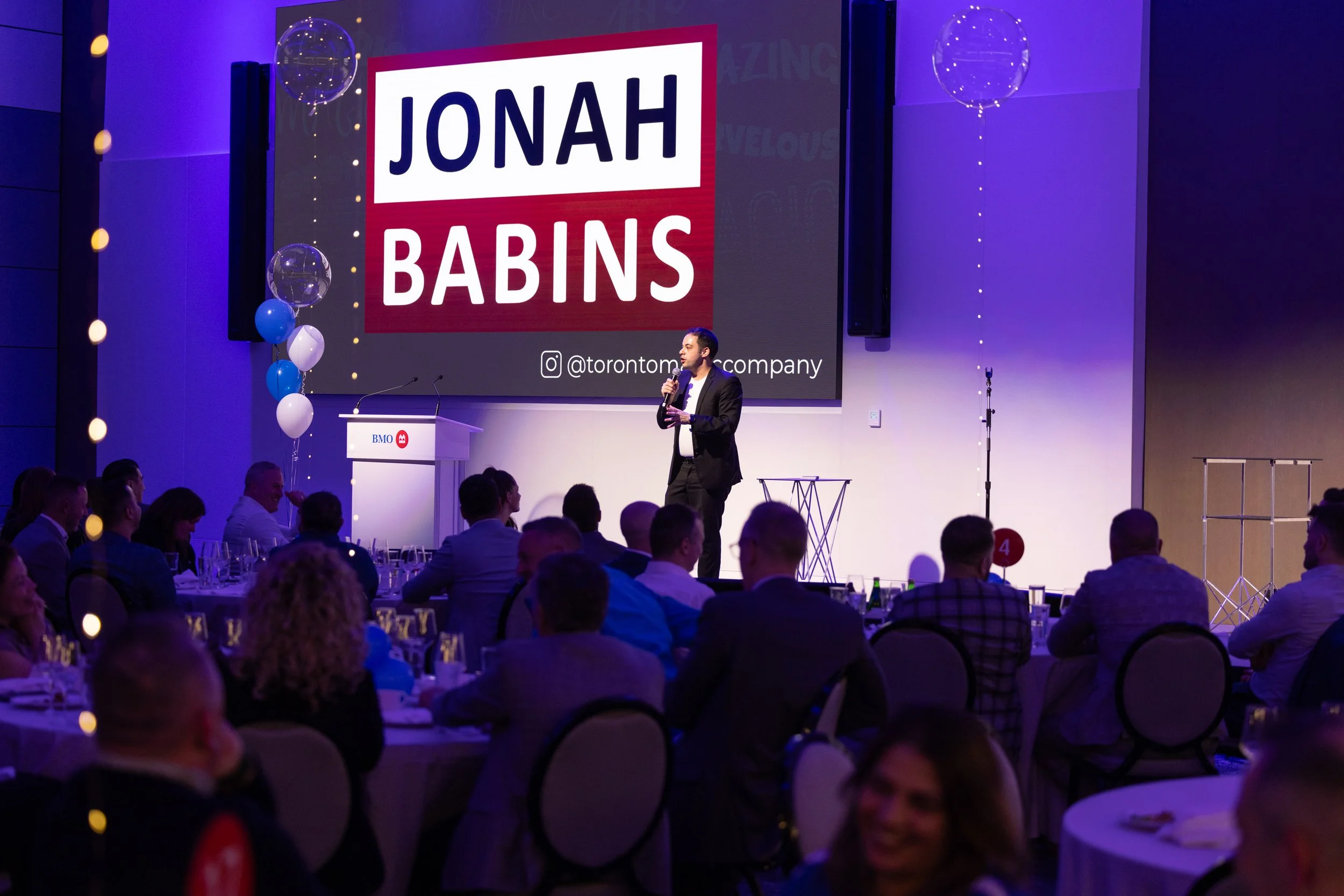
I'm Jonah Babins, co-founder of The Toronto Magic Company. I've performed at over 500 corporate events in Toronto and across Ontario. I've seen what works, what bombs, and what looks great in the planning meeting but dies the second the first guest walks in. This isn't a neutral list of options. It's an opinionated guide based on what actually happens at corporate events.
The Toronto Magic Company has performed for Amazon Web Services, Google, Microsoft, TD, CIBC, Nestlé, Kellogg's, Loblaws, Bell, Deloitte, and the AGO. We've done holiday parties for 30 people in private dining rooms and galas for 600 in ballrooms downtown. Most "entertainment ideas" blog posts are written by people who've never had to actually pull off an event. So here's the honest version.
What corporate entertainment is actually for
There are three things entertainment has to do at a corporate event:
1. Get people mixing. Especially in the first 30 minutes when nobody knows what to do with themselves.
2. Give the night a centerpiece. Something attendees can point to and say "that was the thing."
3. Make people remember the event. A week later, the food is forgotten. The entertainment is what gets retold.
Most "entertainment ideas" optimize for novelty, not these outcomes. That's why so many corporate events feel forgettable despite the host spending real money. The question isn't "what's interesting?" The question is "what actually gets these three things done?"
What actually works
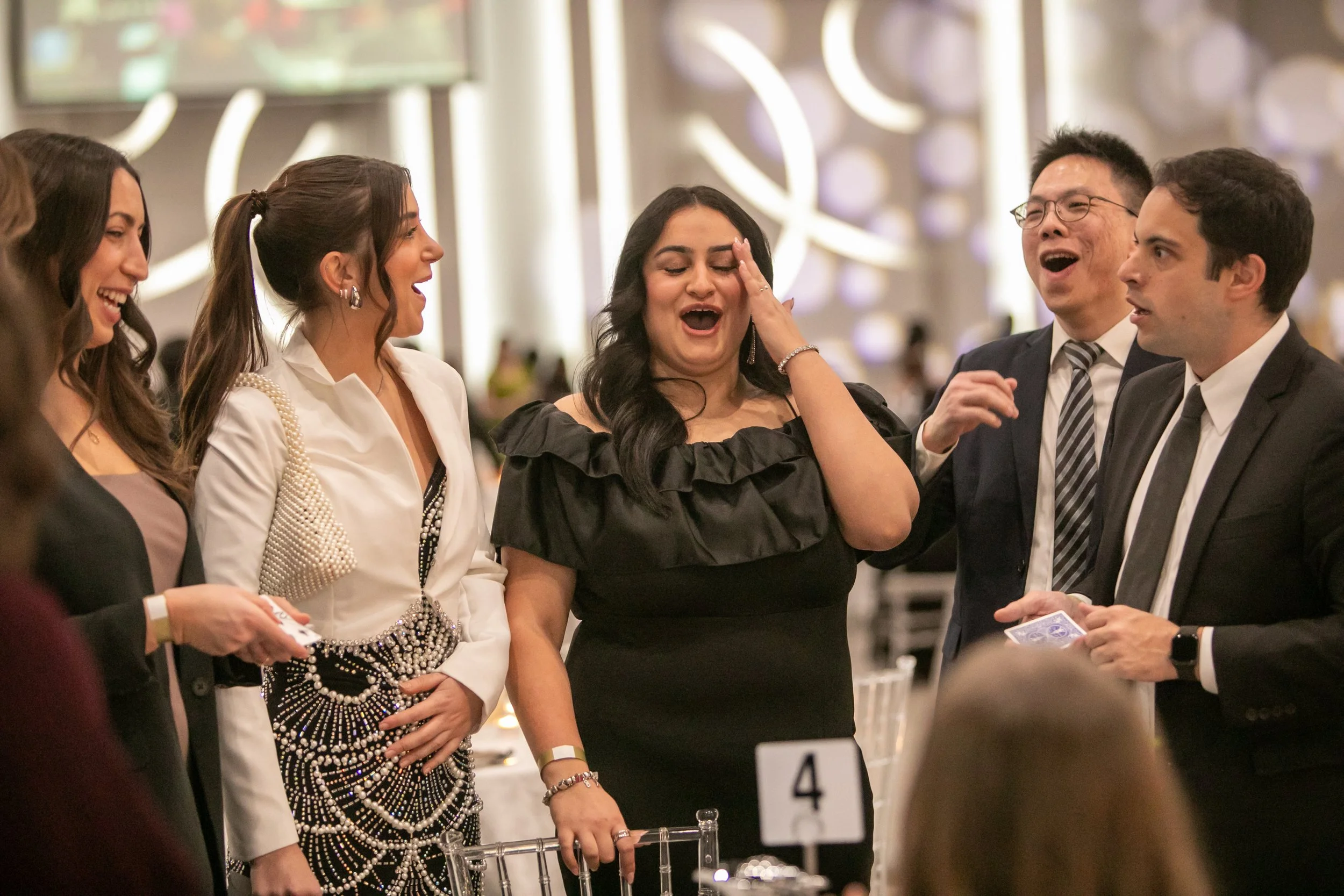
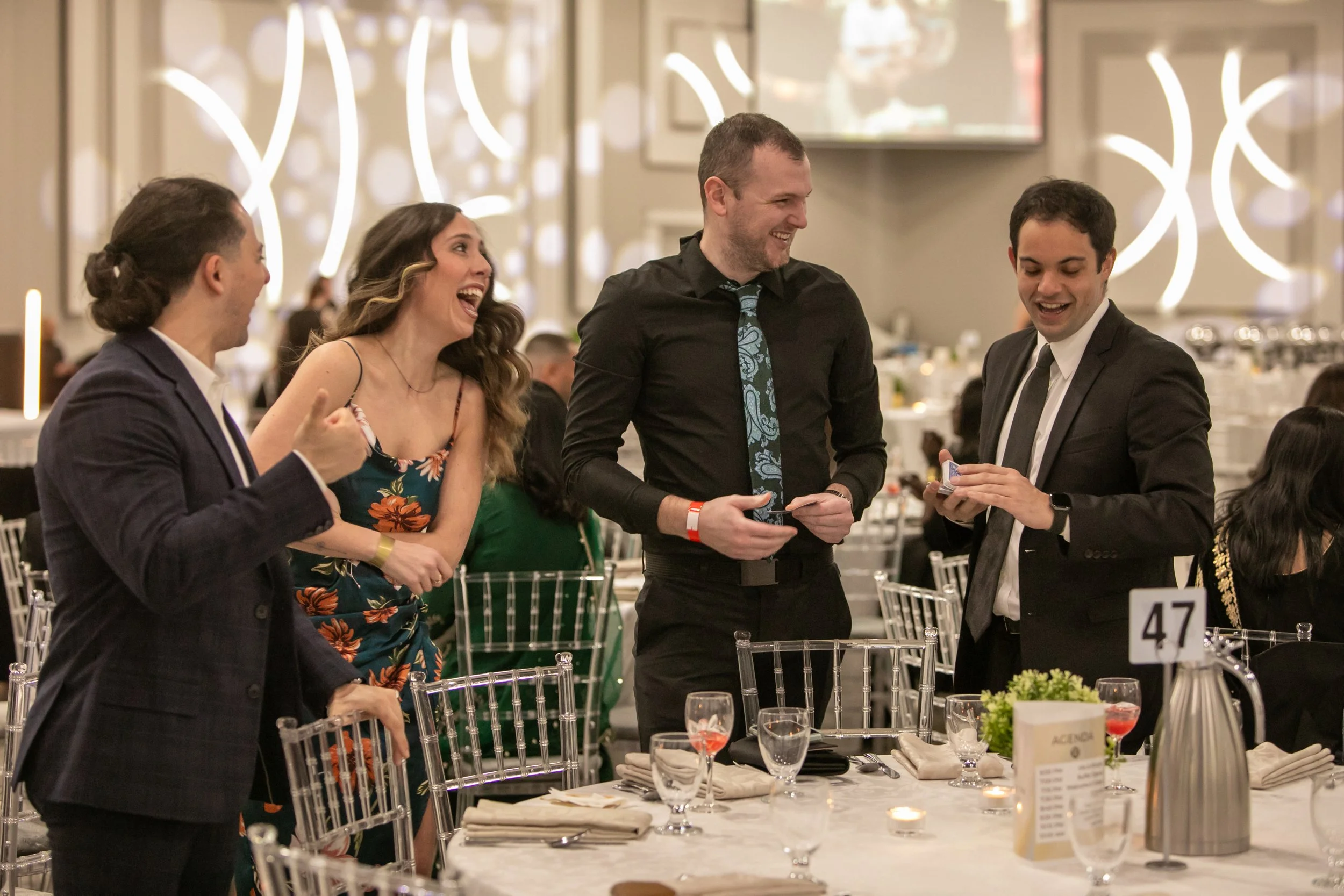
Strolling magic and mentalism
This is what we do, so take it with a grain of salt. But I'm not being precious about it.
Strolling magic during cocktail hour does the mixing job better than anything else. And here's something most planners don't think about: there really isn't another kind of strolling entertainment. A violinist plays in the background. A photo booth or caricature artist pulls people away from the room. Magic is the only thing that goes group to group during cocktail hour, getting your guests interacting with each other instead of just standing around.
Guests don't have to find conversation. They walk up to a magician, watch a 90-second routine, react with whoever's standing next to them, and now they've broken the ice with three new people. The magician keeps moving and the room warms up on its own.
I also make a point of mixing departments. If I spot a group from accounting, I'll spend an extra few minutes with them and pull in two people from sales who are standing nearby. By the time I move on, those two groups know each other. That's part of the job that doesn't show up on the price sheet.
Works best for: 30 to 400 people, any corporate format with a cocktail or networking component.
Stage shows (magic and mentalism)
A 30 to 60 minute show after dinner. Higher production, higher impact, but only as good as the room. Stage shows in venues with bad sightlines or terrible acoustics are painful for everyone.
If you have a venue where everyone can see and hear, a stage show is a real centerpiece. If you don't, stick with strolling.
The thing that makes magic and mentalism shows different from other stage entertainment is that they're interactive. As much as we want guests to remember us, what they actually remember is the moments their coworkers had with each other. Suzy from accounting was on stage. Gerald from sales had a thing happen that everyone is still talking about Monday morning. That's the real product. We're just the excuse for it.
Works best for: 60 to 400 people in a proper performance setup.
Live music and bands
A good band genuinely lifts a room. A bad band makes everyone go home an hour earlier.
The trick is matching the music to the moment. A jazz trio at cocktail hour is great. A full band trying to get a corporate audience dancing at 9pm is almost always a problem (more on that below). If you're booking music, book it as a soundtrack, not as the main event.
Works best for: cocktail hour ambiance, low-key end-of-night with a younger crowd.
Comedians
A 20 to 40 minute set after dinner can land beautifully. But comedy needs a seated, captive, fed audience. It's terrible mingle entertainment.
The biggest risk with comedy is content. I hear from clients about twenty times a year whose previous comedian crossed the line at a corporate event. Off-color, political, or just out of step with the company culture. There are plenty of genuinely clean corporate comedians out there, but you have to search specifically for "clean comedy" or "corporate-friendly," watch a full set (not a highlight reel), and ideally talk to past corporate clients before you book.
To be transparent: we usually only hear about pure-comedy events when they go badly, since we're not there for the ones that go well. So take that with a grain of salt.
Works best for: post-dinner set, 50 to 300 people, in a room set up for them to actually be heard.
What's trendy but doesn't actually work
This is the section nobody wants to write, but it'll save you thousands.
DJ and dancing at corporate events
Everyone wants this. Almost nobody dances.
What actually happens: maybe five young people dance. Everyone else stands awkwardly with a drink, watches for ten minutes, and then leaves. The thing that was supposed to extend the night actually shortens it, because most attendees don't want to dance with their coworkers in 2026. The "we're all going to let loose together" vibe died about a decade ago.
If you want music, get a band or DJ as ambient sound, not as a dance directive. The moment you set up a dance floor and announce it, you've signaled a kind of event most of your guests don't want to be at.
Belly dancers, fire dancers, specialty dance acts
I've watched this fail at probably 30 events. The dancer is excellent. The room can't see them clearly. After five minutes, people stop watching and go back to their conversations. The dancer keeps performing. Nobody is watching. You paid for entertainment that landed for the first 90 seconds and then became background noise.
The exception is very small rooms (under 50 people) where everyone is sitting and there's no other focal point. Otherwise, save the money.
Caricature artists
The math doesn't work. A caricature takes about 10 minutes per person. You have 200 people at your event. The artist draws 12 of them in two hours. The other 188 attendees never get one and feel mildly left out. The 12 who do get drawings throw them in the recycling that week.
You paid for entertainment that 6% of your guests experienced and 0% kept. Skip it.
Escape rooms
Excellent team-building activities. Terrible party entertainment. Escape rooms require the group to commit 45 to 60 minutes of focused attention, which doesn't blend with a cocktail or dinner format. If you're doing a daytime offsite and team building is the goal, great. If it's a holiday party or client event, wrong tool.
The honest truth about blending entertainment
Most of the best corporate events we do don't blend magic with music or magic with comedy. They're magic for the full night: strolling during cocktail hour, then a stage show after dinner. One performer (or two for bigger rooms) carries the entire evening, the audience knows who they're watching, and the energy builds instead of resetting between acts.
Blended programs (magic for 20 minutes, then a band, then a comedian) can work for very big galas with multiple distinct sections. For most corporate events, picking one format and doing it well outperforms the variety-show approach.
Budget brackets (our pricing)
These are TMC's actual pricing tiers in Toronto. Other Toronto vendors will be in similar ranges.
| Budget | What it gets you |
|---|---|
| $2,000 to $3,000 | One performer, 90 minutes of strolling magic OR a cocktail-hour-only setup |
| $3,000 to $4,000 | A 50 to 60 minute stage show, OR a longer strolling block (up to 3 hours) |
| $4,000 to $5,000 | Two magicians for a cocktail hour |
| $5,000 to $6,000 | Full event playbook: cocktail-hour strolling plus a 50 to 60 minute stage show |
| $6,000 to $10,000 | Two performers across a full evening |
| $10,000+ | Multi-performer custom production, larger venues, often with travel components |
Anything significantly below $2,000 in Toronto is usually an inexperienced performer or someone priced into the children's-party market.
Group size brackets
| Group size | What works best |
|---|---|
| Under 50 | A focused stage show. Close-up doesn't work well at this size because people group together and you can't keep splitting them up. |
| 50 to 100 | Strolling magic during cocktails plus an optional 20 to 30 minute stage closer |
| 100 to 300 | Strolling magic for full coverage, plus a stage closer after dinner. One performer can usually handle this if the cocktail hour is long enough. |
| 300+ | Two performers strolling for full coverage, stage show after dinner essential |
| 500+ | Production-grade show, multiple performers, dedicated event staff |
Common mistakes I see at corporate events
Booking entertainment last. Most planners lock the venue, the caterer, the AV, and the speakers first, then think about entertainment two weeks out. The best performers in Toronto book six to twelve months in advance. By the time you call us in October for a December holiday party, your options have already narrowed.
Underestimating food service. Catering and venue staff routinely promise four courses to 300 people in 60 minutes. It will take at least 90, often 120. Build the night around what the food service is actually going to do, not what they say they'll do. I've watched dozens of stage shows pushed back 45 minutes because dinner ran long, and the show suffers every time. Plan the entertainment around realistic timing, not optimistic catering math.
Programming entertainment during dinner. Don't. Let people eat and talk. Dinner is when coworkers actually build relationships, and a performer trying to compete with food and conversation is fighting a losing battle. Save entertainment for before and after.
Treating "we had magic last year" as a reason to skip magic this year. This comes up constantly. The instinct is "we did X last year, let's do Y this year." But our two performers do completely different shows. Ben Train does comedy mentalism. I do interactive magic. BMO booked Ben one year, loved the event, and booked me the following year for an entirely different show. Uncharted did the same thing. The audience didn't notice they were getting magic again, because the experience was new. You can repeat what works without repeating yourself.
Discount-shopping the entertainment line item. Cutting the entertainment budget by 20% to save $1,000 on a $50,000 event is one of the worst trades in event planning. Entertainment is what people remember. Cut the late-night snack station instead.
Not asking the performer for references from similar events. A magician who's done your industry, room size, and event format before is worth twice one who hasn't. Ask. We send references unprompted because we have hundreds to choose from.
Treating entertainment like a side dish. Nobody talks about the food. They only talk about the entertainment. Build the event around it, not the other way around.
Real examples from recent TMC events
BMO holiday party. Two performers, full evening, hundreds of guests across two floors. The brief was "make this feel different from last year." We delivered cocktail-hour strolling plus a stage show with custom audience predictions. Read the BMO case study
Uncharted Holiday Party. A tech company that originally booked Ben Train for mentalism, loved the show, and rebooked Jonah Babins the following year for an entirely different format. Same client, two different shows, two different "best events of the year." Read the Uncharted case study
CDW employee appreciation party at El Mocambo. Full venue takeover, multi-room layout, mixed cocktail and stage components. Employee appreciation was the entire brief, and the entertainment was the centerpiece. Read the CDW case study
FAQ
How much does corporate entertainment cost in Toronto?
For professional, corporate-tested entertainment, budget $2,000 to $5,000 for one performer at a single event, and $5,000 to $10,000 for a full evening with multiple performers. Anything significantly below $2,000 in Toronto is usually an inexperienced performer or someone priced into the children's-party market.
Should we book magic, music, or comedy?
Honestly, the strongest corporate events we do are magic for the full night: strolling during cocktail hour and a stage show after dinner. One format, done well, beats a variety show that resets the room every 20 minutes. Music can work as background. Comedy can work as a post-dinner closer if you've vetted the comedian carefully.
When in the event should entertainment happen?
Strolling during cocktail hour (the first 30 to 90 minutes). Stage show after dinner. Nothing during dinner: let people eat and talk. That's when relationships actually get built, and a performer trying to compete with food service is fighting a losing battle.
How far in advance should we book?
Six to twelve months for December holiday parties. Three to six months for spring and summer events. The best performers in Toronto are booked solid in November and December a year out.
What's the difference between strolling magic and a stage show?
Strolling is interactive, intimate, and group to group. Best as mixing entertainment during cocktails. A stage show is a 30 to 60 minute focused performance with everyone watching together. Best as the night's centerpiece after dinner. The strongest events do both.
Is mentalism appropriate for corporate audiences?
Yes, when done right. Mentalism (mind-reading, prediction, and influence-style routines) is clean, sophisticated, and works for senior audiences and conservative industries (banking, law, consulting) better than traditional magic.
Should we have one performer or two?
Under 300 guests, one performer is usually enough if you give them a full cocktail hour to cover the room. Over 300, you need two performers during cocktails so guests don't sit in dead zones waiting for someone to come over.
What if our CEO is speaking that night?
The CEO should speak before the show and introduce it. Nobody wants to follow the finale of a magic or mentalism show. The natural arc is: cocktail hour with strolling magic, dinner with conversation, CEO speech, then the show as the night's climax. That order works.
I'm Jonah Babins, co-founder of The Toronto Magic Company. I've performed at over 500 corporate events. I'm the recent winner of the Alan Slaight Award for Canadian Rising Star in Magic, have been featured on Penn & Teller's Fool Us, Breakfast Television, CTV, and The Marilyn Denis Show. I run shows alongside my co-founder Ben Train, who's been Magic Consultant on Amazon's The Boys, Apple TV's Ghostwriter, and the feature film Disappearance at Clifton Hill.
If you're planning a corporate event in Toronto and want to talk through what would actually work, book a quick call or reach us at (647) 271-8868. We're happy to give honest advice even if it turns out we're not the right fit.